Rizósfera Viviente
Art, science and the hidden world beneath plants
About the exhibition
Rizósfera Viviente was an immersive exhibition developed within the Millennium Nucleus for Super Adaptable Plants (MN-SAP) to bring the rhizosphere—the complex ecosystem surrounding plant roots—closer to the public through the intersection of art and science.
Presented at the Museo Nacional de Historia Natural (MNHN) in Santiago in 2024, the exhibition invited visitors to explore how plants interact with microorganisms and their environment, and how these interactions can influence plant resilience under climate change.
The initiative combined scientific knowledge with immersive audiovisual resources to make visible processes that normally occur underground and remain largely unseen. Through this approach, the exhibition highlighted the ecological relevance of plant–microorganism interactions and the importance of understanding these relationships in the context of environmental change.
The project achieved broad public visibility, with 15 media mentions across national press, science communication platforms, cultural agendas and partner institutions. Coverage included Universidad Adolfo Ibáñez, Museo Nacional de Historia Natural, ANID, CAPES, Futuro 360 and Ladera Sur.
Collaboration in the rhizosphere
“Probably one of the most interesting interactions to study in these systems is collaboration, where there is mutual benefit in a cooperative relationship. For example, a plant can provide a habitat for a microorganism in exchange for help defending against disease. By combining their capabilities, both partners can face challenges they would probably not be able to confront alone.”
María Josefina Poupin
A participatory experience
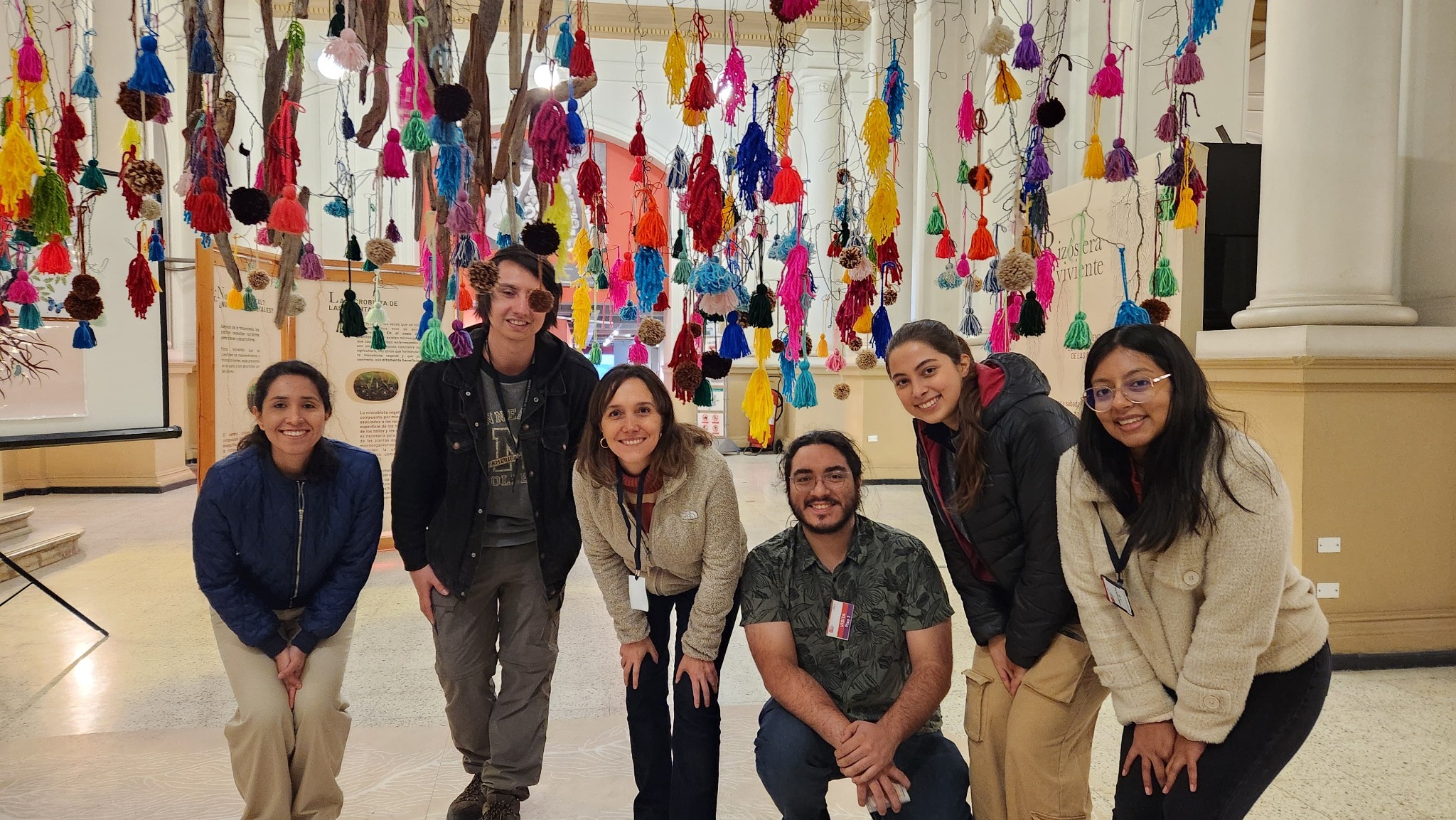
The exhibition was designed as a participatory experience. At the opening, visitors were invited to add woven elements representing fungi, bacteria and nutrients to the installation. They could also take part in a hands-on workshop led by artisan Verónica Curihuinca, whose work brought ancestral textile techniques into dialogue with the scientific representation of the rhizosphere.
Public reach
Over the exhibition period, 19,816 people visited Rizósfera Viviente. This included 16,289 general visitors and 3,527 students and participants in 93 organized delegations. The exhibition therefore reached both family audiences and school groups, with particularly strong participation from children and young people.
MJP Lab participated in this science communication initiative as part of MN-SAP, contributing to bringing research on plant–microorganism interactions and environmental adaptation to a broader audience.
Gallery
More images from the exhibition will be added here.
Read more
Universidad Adolfo Ibáñez · Museo Nacional de Historia Natural

